The Dreaded “Tell me about yourself”
“Tell me about yourself” is one of the most common questions you will be asked in a job interview.
And it can cause some serious anxiety!
Your initial thoughts might be:
“How will I stand out?”
“What is it they really want to know in my answer?”
“Who ACTUALLY am I?”
Having conducted numerous interviews, I can attest to how common it is for candidates to ramble, over-explain, and let their nerves get the best of them with this question.
It’s often your first opportunity to make a great impression and give the interviewer a clear picture of what you bring to the role.
However, there’s no need to worry. There is a simple formula you can use to make your answer sound clear, focused, and polished.
Time to Level Set
Interviewers are likely going from one interview to the next, day after day. They are tasked with finding a candidate who is competent to do the role and, more importantly, someone they can see themselves working with!
So how do you stand out? You don't need a flashy story or a perfectly rehearsed speech. Your goal is simply to make it easy for the interviewer to understand your experience, your strengths, and why this role makes sense as your next step.
What is the Interviewer Looking For?
First, let’s understand the purpose of this question and what the interviewer is looking for.
The interviewer is asking this question to gain a general understanding of who you are, how you would fit into the role, and to get an overview of your skillsand past experiences.
Basically, “Does this person's experience align with what we need? Do they have the skills to contribute to this role? Could I see myself working well with this person?”
🫡Your mission: Find a way to relate your skills directly to the role so you can tailor your answer.
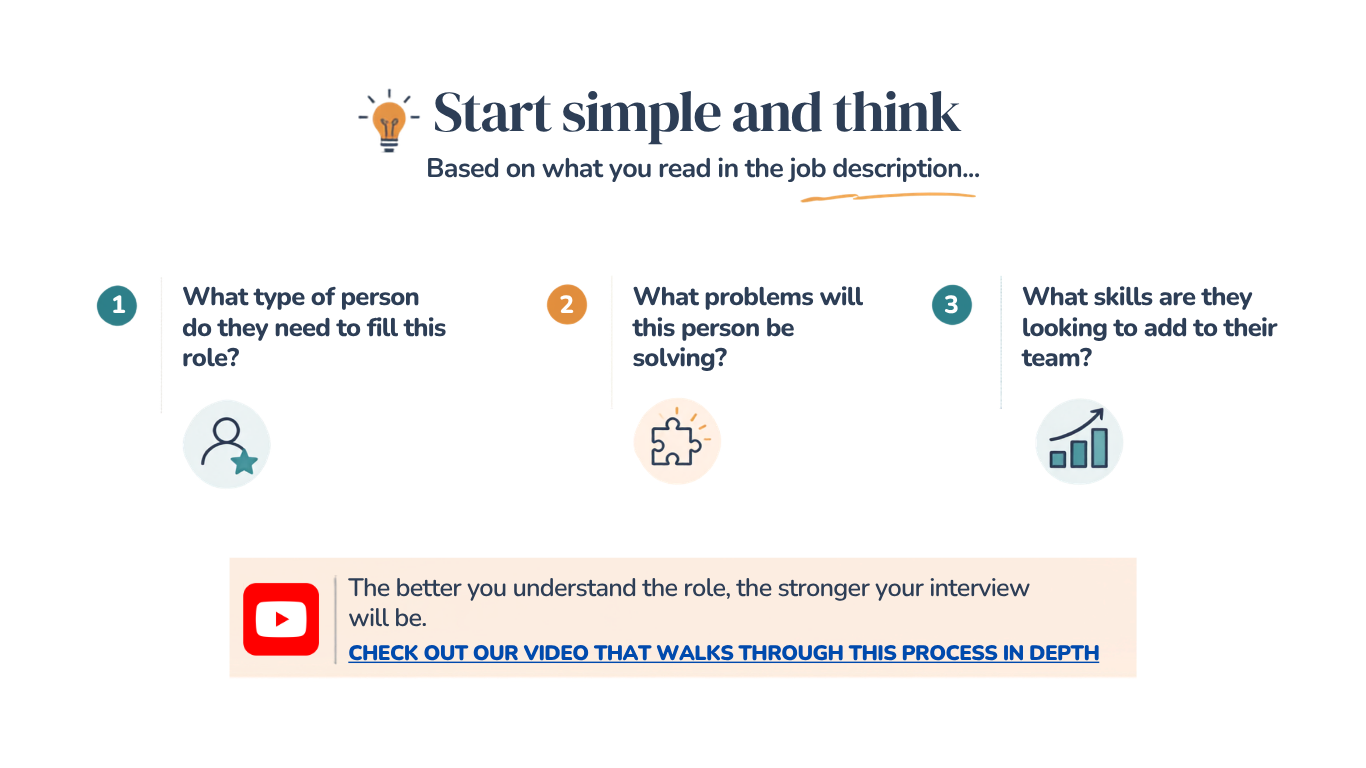
Click on anywhere on the image above to access a helpful step-by-step video.
How Long Should This Answer Be?
Aim for about 60–90 seconds.
Think of this as a quick professional introduction, not your entire career history. Your goal is to give the interviewer enough context to understand what you've done in the past, what you're doing now, and why this new opportunity makes sense for you.
And don't worry about hitting exactly 60 or 90 seconds. If you've made your point, stop. You don't need to keep talking just to fill time.
What Should You Not Say?
Steer clear of these no-nos:
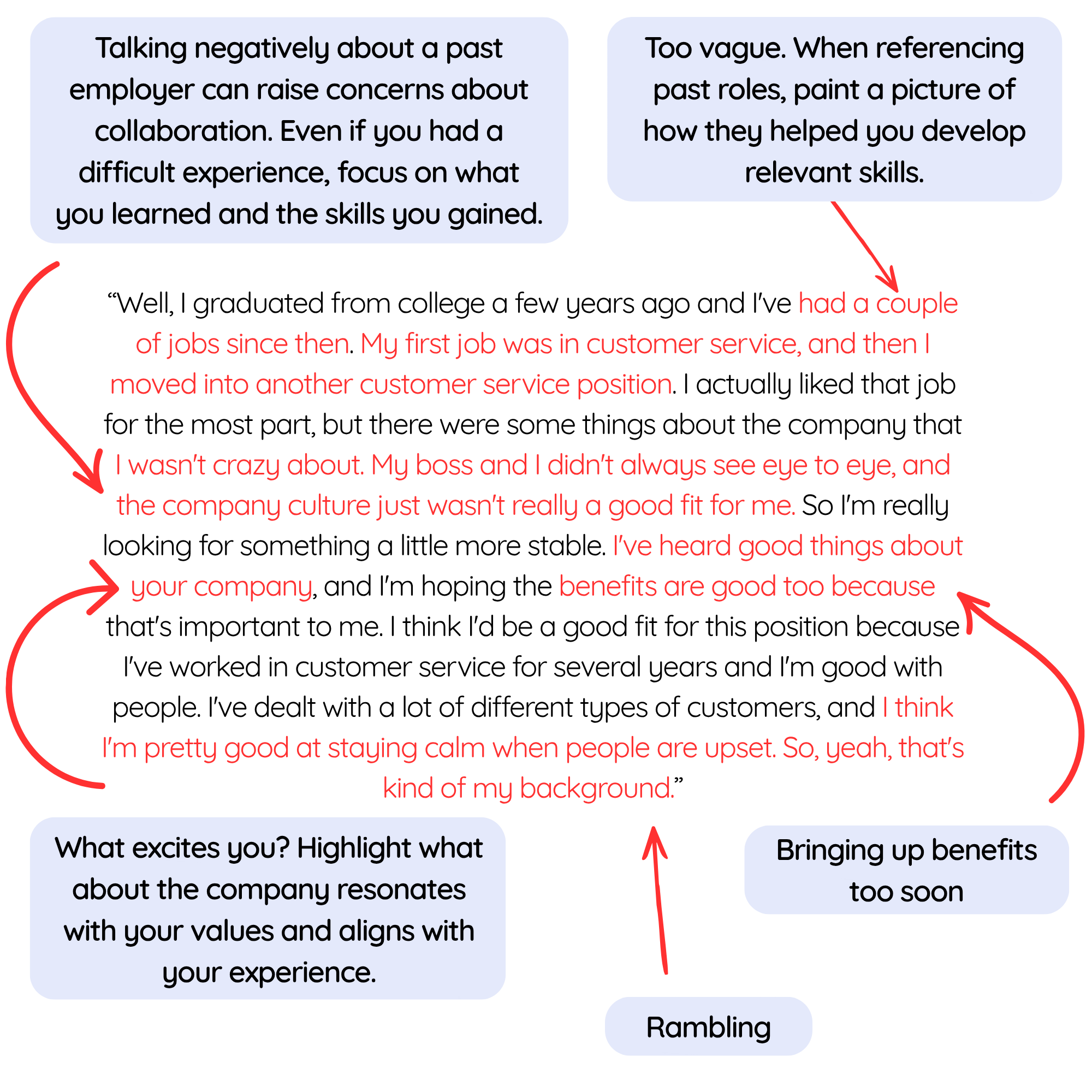
Giving a long-winded and drawn out response. Remember, interviewers sit through countless interviews. They are looking for a concise answer that connects your experience to the role.
Talking about your family life or personal hobbies. These details can inadvertently lead to assumptions or biases, and distract from your professional qualifications.
Being too vague. Avoid general statements like “I'm a hard worker” or “I'm a people person” without examples to back them up. Give the interviewer a clear picture of your experience, strengths, and the value you can bring to the role.
Trying to memorize every word. You want to sound polished, not robotic. Know the key points you want to cover and practice saying them out loud several times. I personally write out my answer to this question and practice it 5–7 times out loud before an interview. I pay attention to my body language, facial expressions, and timing. Each time I practice, my answer sounds a little different and a little more confident.
Example Bad Response
Let’s look at these no-nos in action:
Let’s Get to The Winning Formula
When answering this question, focus on three points:
What you've done in the past
What you're doing now
What you plan to do in the future
Example of a Good Response: Tell Your Story
An important step is to relate your past and current experience with the open role so the interviewer can picture how well you'll integrate with their company. Here’s a great example answer:
[PAST]
“I've been working in customer service and call centers for the past five years. I started as a temp with the Burnham company and was promoted into an administrative role after just six months. That's where I really discovered that I enjoyed customer service and problem-solving.”
[NOW]
“That experience led me to transition into the claims and appeals department, where I've spent the last four years. In that role, I've really strengthened my communication and conflict-resolution skills.”
[FUTURE]
“What excites me about this opportunity is the chance to take that experience into a leadership role. I'm excited about the opportunity to lead a team, advocate for customers, and help ensure fair outcomes. I think my experience handling grievances would translate really well into an assistant manager role.”
Example of a Great Response: Show Your Impact
To go from good to great, highlight and quantify your achievements. When you do this, the recruiter gets evidence of your skills. It shows them that you understand the value of your work, pay attention to results, and can clearly articulate the impact you've made.
In other words, you're not just telling them you're good at something, you're showing them.
Using the example from above, see how easy it can be to add data when discussing your current or past experience.
[NOW]
“That experience led me to transition into the claims and appeals department, where I've spent the last four years. In that role, I've really strengthened my communication and conflict-resolution skills. I also consistently exceeded performance standards, with 73% of my calls being answered in 60 seconds or less.”
What if You Don’t Have Data to Quantify Your Response?
When you're anxious, it can be surprisingly difficult to remember things you've accomplished! Your mind can go blank when you're put on the spot, even when you know your experience inside and out. Don't worry about coming up with an impressive statistic. Instead, think about moments when you made something faster, easier, better, or more efficient.
Ask yourself:
Where have I made a process more efficient?
When have I received positive feedback from a coworker or manager?
Have I ever solved a difficult or recurring problem?
Have I taken on responsibilities beyond my normal role?
Have I helped a customer, coworker, or team achieve a better outcome?
Impact doesn't always mean a percentage or a dollar amount. It can mean improving a process, helping more customers, solving a difficult problem, supporting your team, or being trusted with greater responsibility.
Let’s look at some examples…
With data
“As a result of my project, sales increased by 18%.”
“...I've been able to see an additional 6 patients per day.”
“...our sales increased by 5%.”
“I coordinated training for more than 50 employees, helping them get up to speed with our new system.”
Without data
"I streamlined our inventory system."
"I enhanced the checkout process and reduced wait times."
“I was trusted with taking on some of our team's most complex cases.”
“I identified a recurring issue in our process and developed a solution that prevented it from happening as frequently.”
“I regularly handled some of our most complex customer issues.”
“I created a resource that helped customers get answers more quickly.”
Remember: if you don't know the numbers, highlight the impact.
One More Thing: This Formula Works for Similar Questions
“Tell me about yourself” can be asked in a variety of ways. The same Past > Now > Future approach can be used for questions like:
“Walk me through your resume.”
“Tell me about your background.”
“Tell me about your experience.”
“How did you get into this field?”
“What brings you here today?”
Now, Let’s Get to Prepping
With these tools, your answer will be spot on! Use the template below to draft your answer and then practice, out loud, at least 3-5 times.
TEMPLATE
Full Script:
“I’ve been working in [industry/field] for [X years], primarily focusing on [area of experience]. In my previous/current role, I [key responsibility or accomplishment], which helped me develop [relevant skill].
Currently, I’m [what you’re doing now], where I’ve been able to [skill/achievement/impact].
What interested me about this opportunity is [specific aspect of the role/company]. I’m excited about the opportunity to bring my experience in [relevant skill/experience] to [what they need].”
Easy Formula:
PAST: “I’ve spent the last [X] years…”
NOW: “Currently, I…”
FUTURE: “What interested me about this role is…”
IMPACT: “One thing I’m particularly proud of is…”
Remember, you don't need to memorize your answer. Know the key points you want to communicate, practice saying them out loud, and let the wording change naturally each time. Your goal isn't to deliver a flawless performance. It's to help the interviewer understand your experience, your strengths, and why you're interested in the role. You already know your story, and this formula simply helps you tell it.
